What is a laboratory freezer?
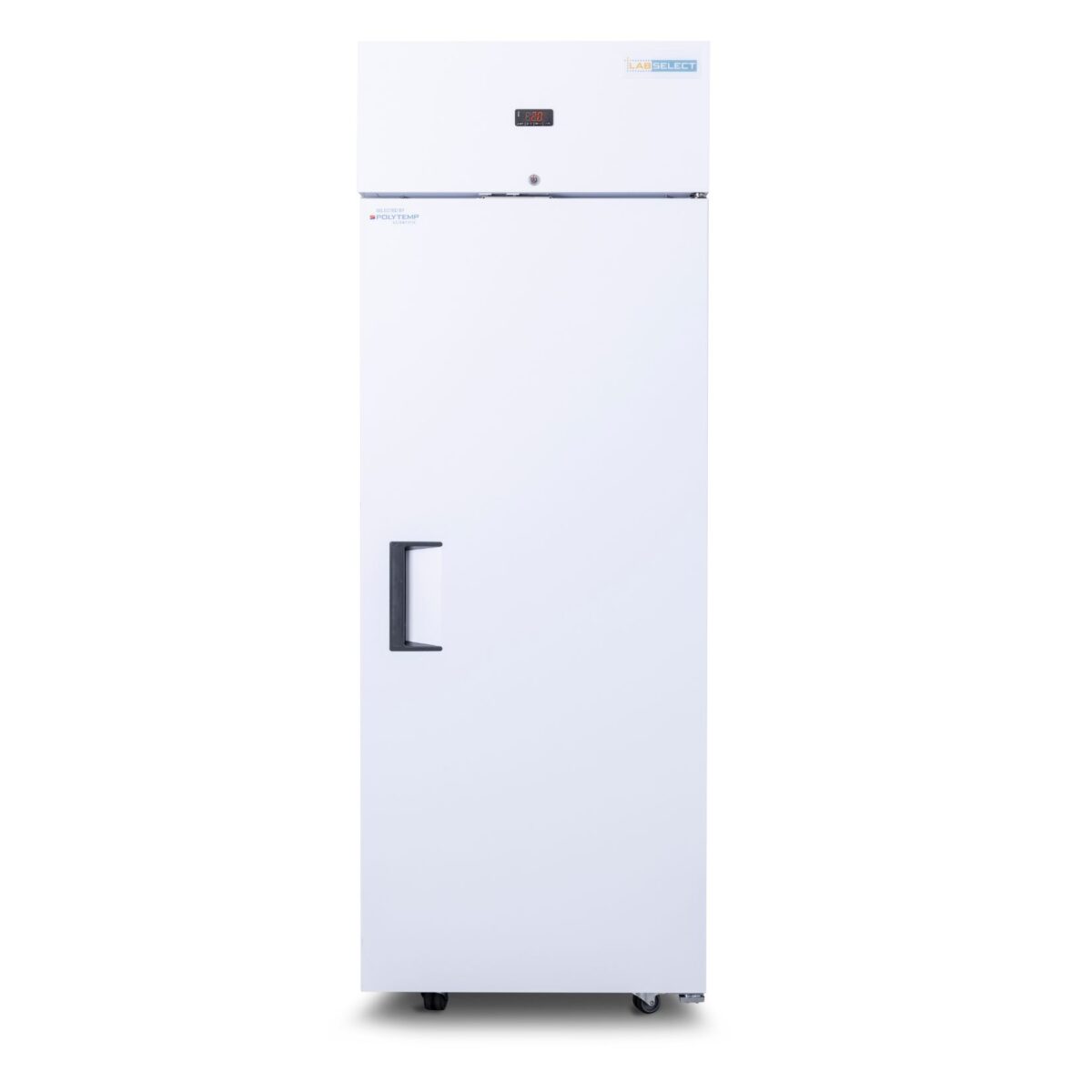
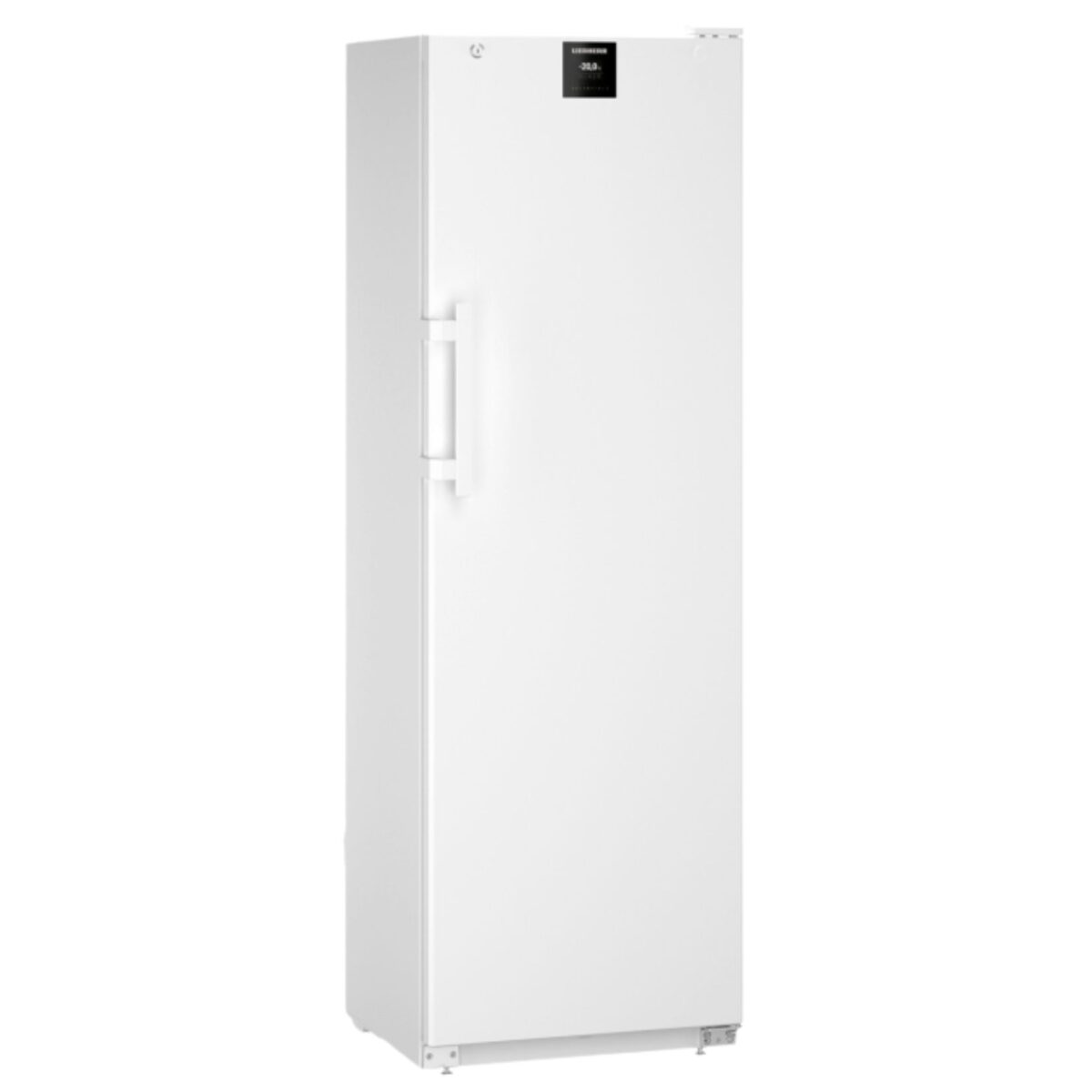
A laboratory freezer is a professional freezing unit for controlled storage between -10°C and -40°C. Specifically, it stores samples, reagents, enzymes, culture media and biological materials. Moreover, it differs from a household freezer in several ways. For example, it offers uniform temperature distribution, forced air circulation and audible alarms for deviation. In addition, optional datalogging supports compliance requirements. As a result, our laboratory freezers maintain stable temperature across the entire working volume. Furthermore, this stability holds even with frequent door openings, which is essential for sample integrity.
When do you choose a laboratory freezer?
Biological samples and clinical materials must often be stored under verifiable temperature conditions. In that case, a household freezer is insufficient. For example, with each door opening of a consumer model, cold escapes rapidly. As a result, warm and cold zones develop inside. By contrast, a professional laboratory freezer maintains uniform temperature with deviation within ±3°C. Moreover, it continuously records values with timestamps and alarms on overrun. Therefore, certified freezer cooling is essential for accreditation under GLP, GMP, ISO 17025 or ISO 15189.
Which types of laboratory freezer do we supply?
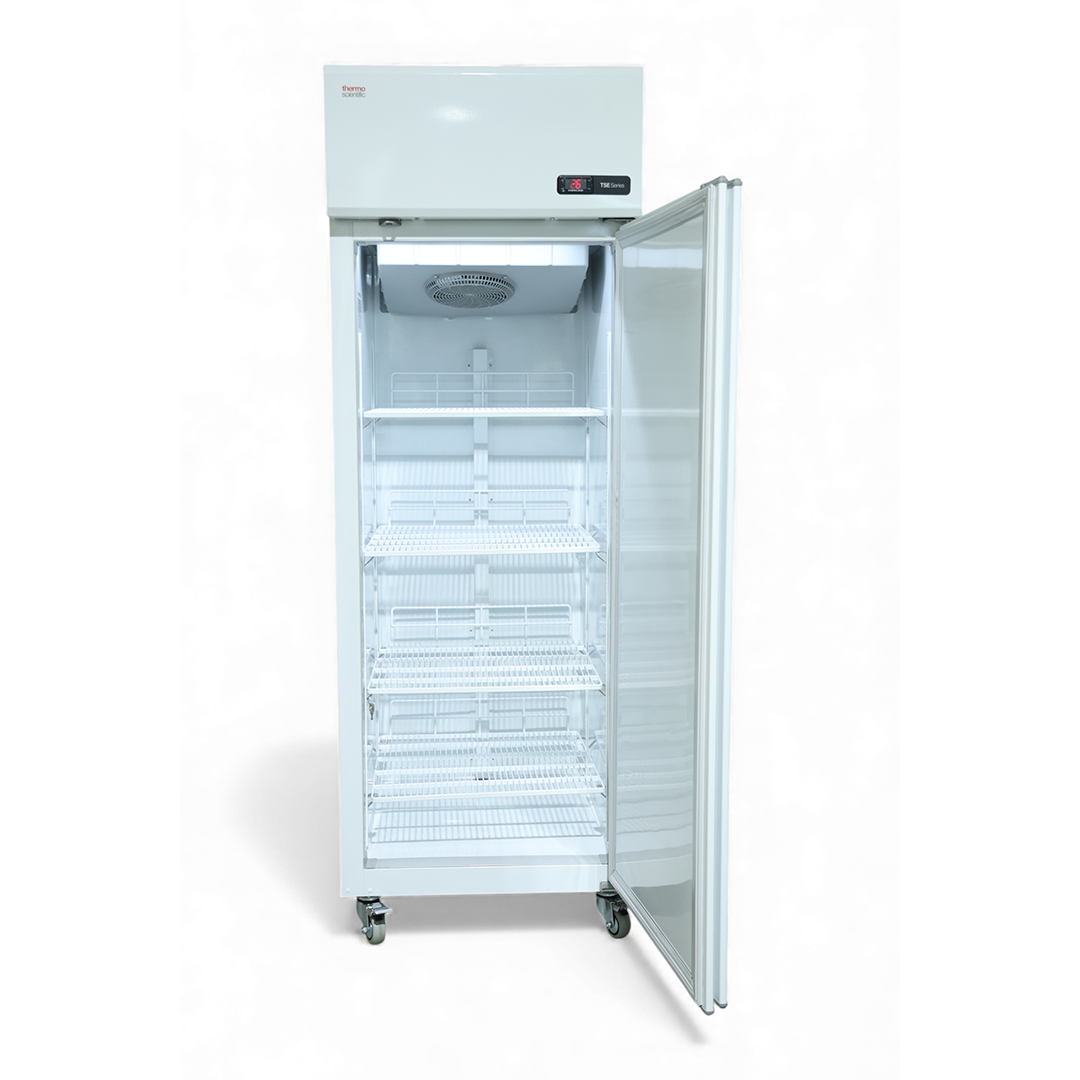
Our laboratory freezers are available in various configurations. Specifically, your application and available space determine the right choice. For example, an upright laboratory freezer offers the largest capacity and optimal accessibility. As a result, it suits frequent use with doors and drawers at working height. By contrast, a compact undercounter model fits under the workbench. Therefore, it is ideal in limited space.
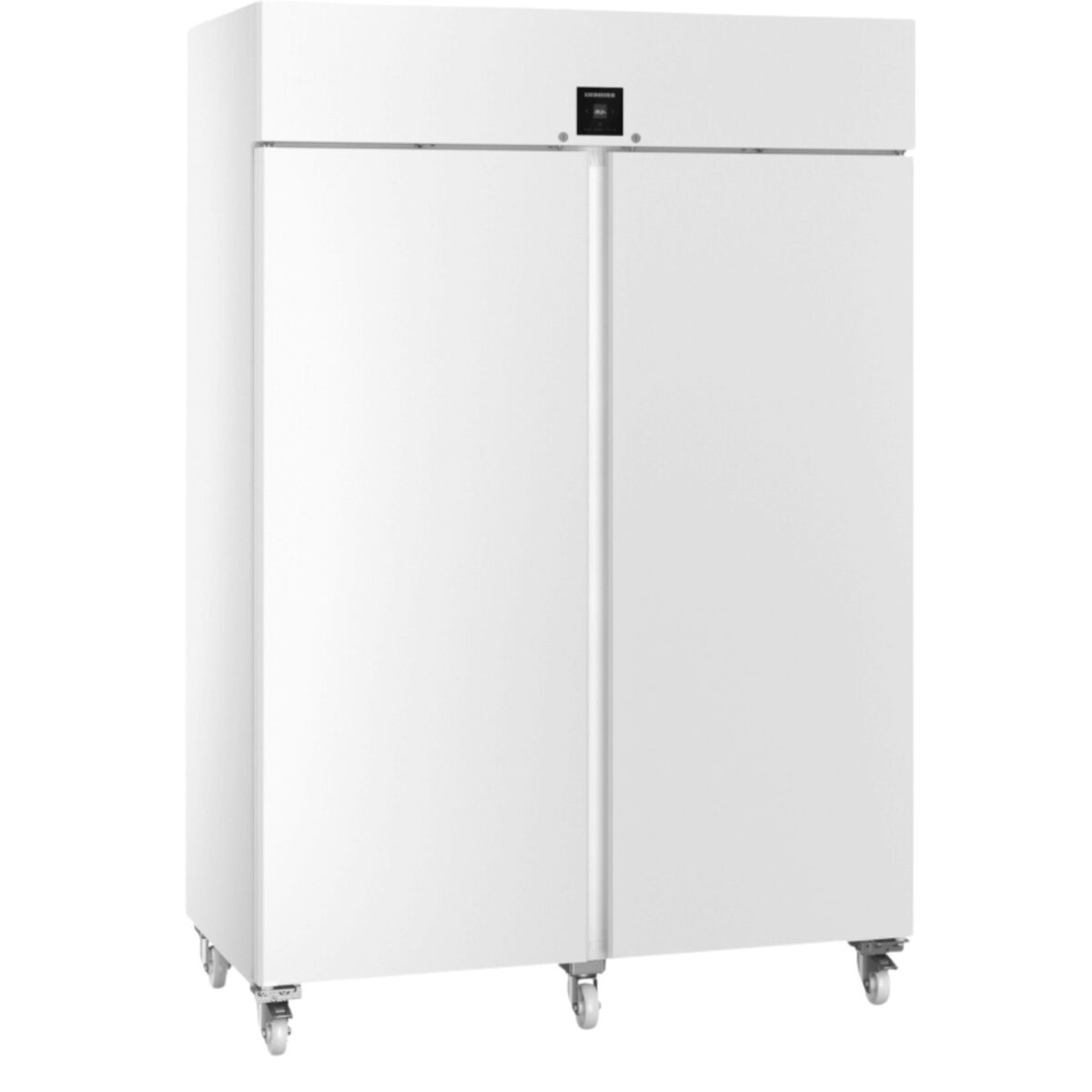
Furthermore, you choose between drawer or shelf configuration. Specifically, drawer configuration suits systematic sample storage such as biobank boxes. In addition, shelf configuration provides flexible storage for various material types. Moreover, capacities range from approximately 100 litre undercounter to 1500 litre double-door versions.
For temperatures below -50°C, we refer you to our ULT freezers (-50°C to -86°C). Similarly, for storage below -150°C, see our cryogenic storage (liquid nitrogen).
Which brands of laboratory freezer does Poly Temp supply?
Poly Temp Scientific supplies laboratory freezers from four leading brands. Notably, each brand has its own strengths.
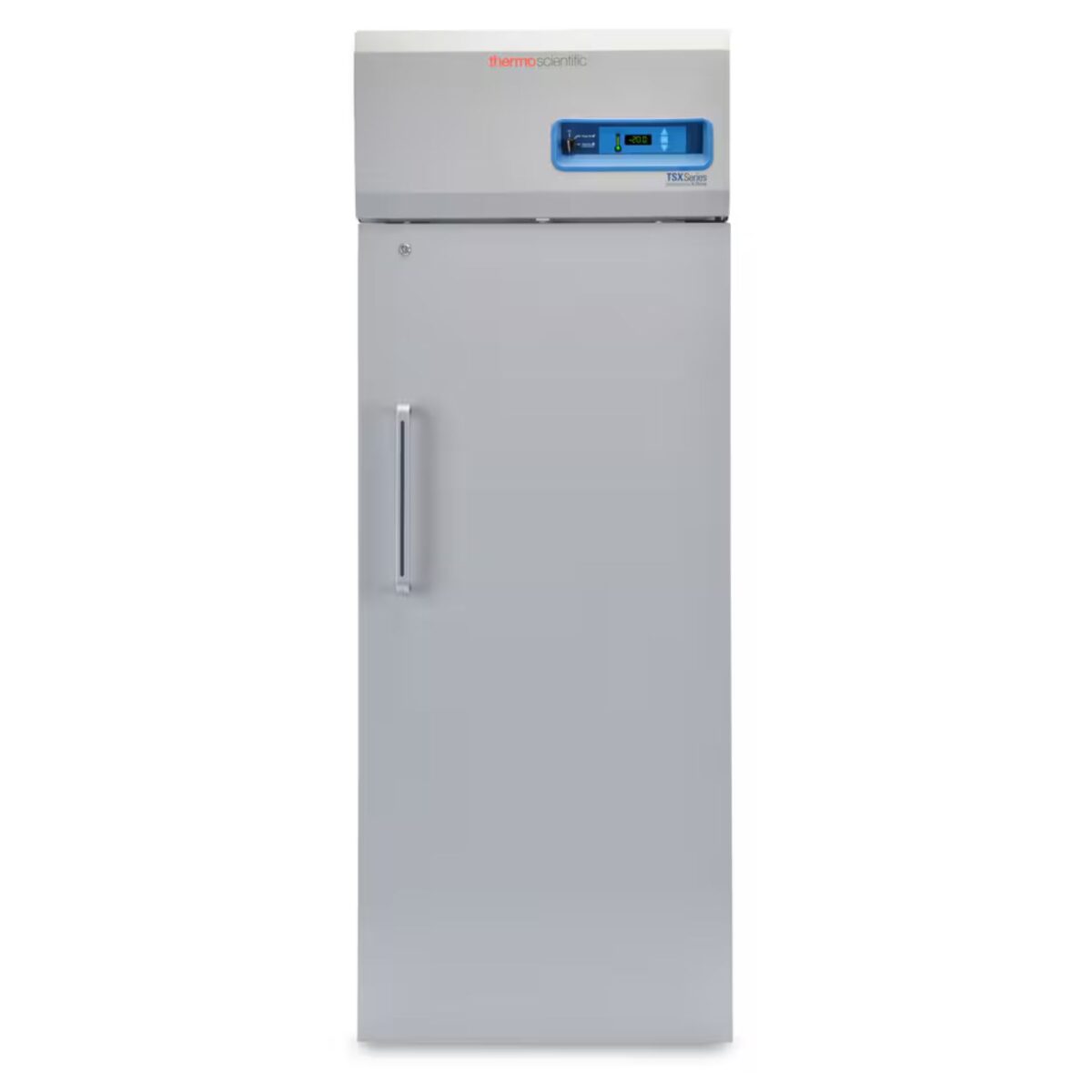
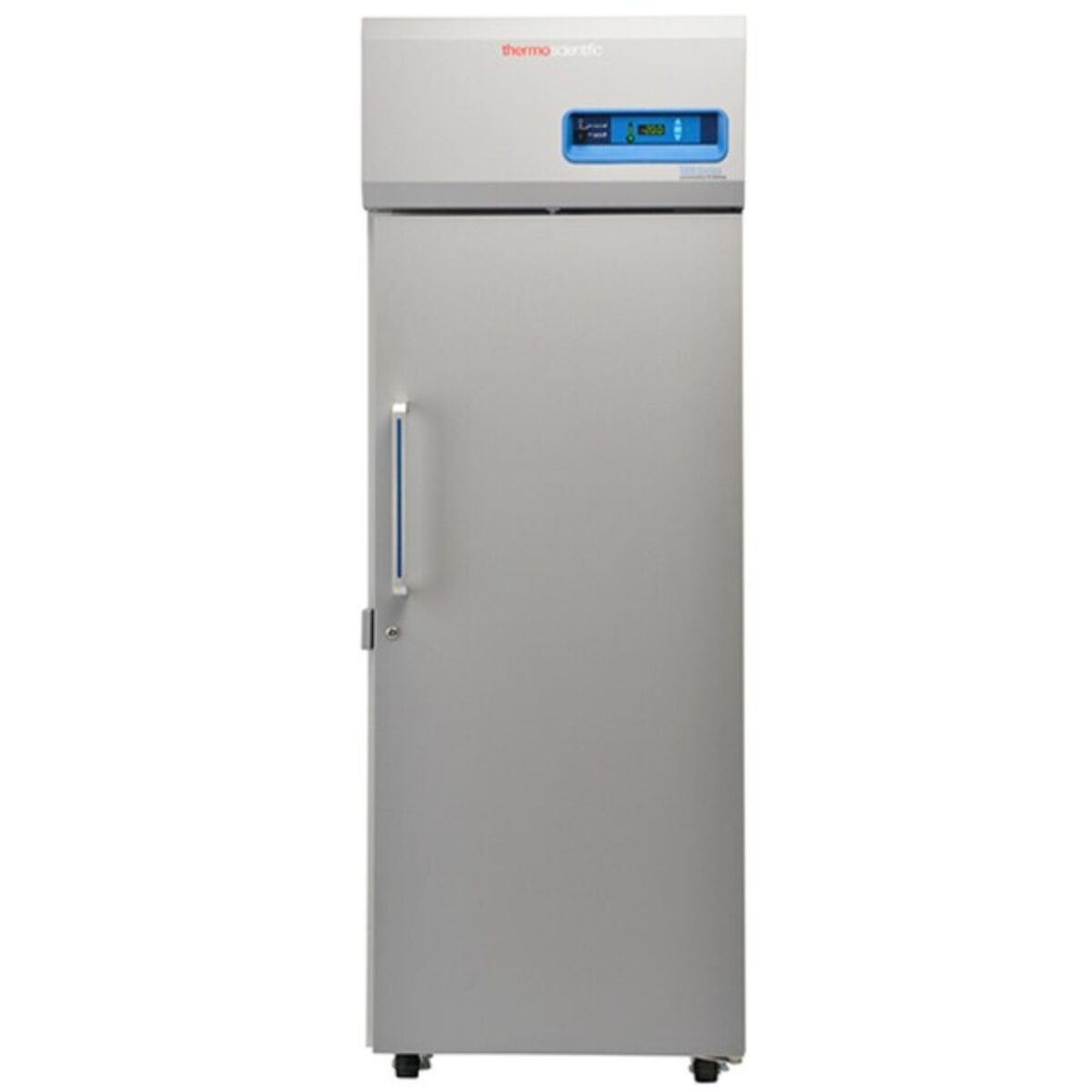
Thermo Scientific offers high-performance models in the TSX series. Specifically, this includes the TSX series (-20°C to -30°C, automatic or manual defrost) and the TSX Enzyme Freezer (-15°C to -35°C for enzyme storage). In addition, the TSX Universal and TSX Core reach -40°C for general lab use. Furthermore, the TDE Standard Performance is a compact standard freezer. Moreover, the TSX premium variant uses V-drive technology for variable compressor speed. As a result, you achieve energy savings of up to 50 percent.
Liebherr is known worldwide for precision and reliability in laboratory cooling. Specifically, the LGPv and LGex series feature forced air circulation. As a result, they are broadly deployable in research, clinical lab and pharmacy. In addition, the LGex series is ATEX-rated for flammable solvents.
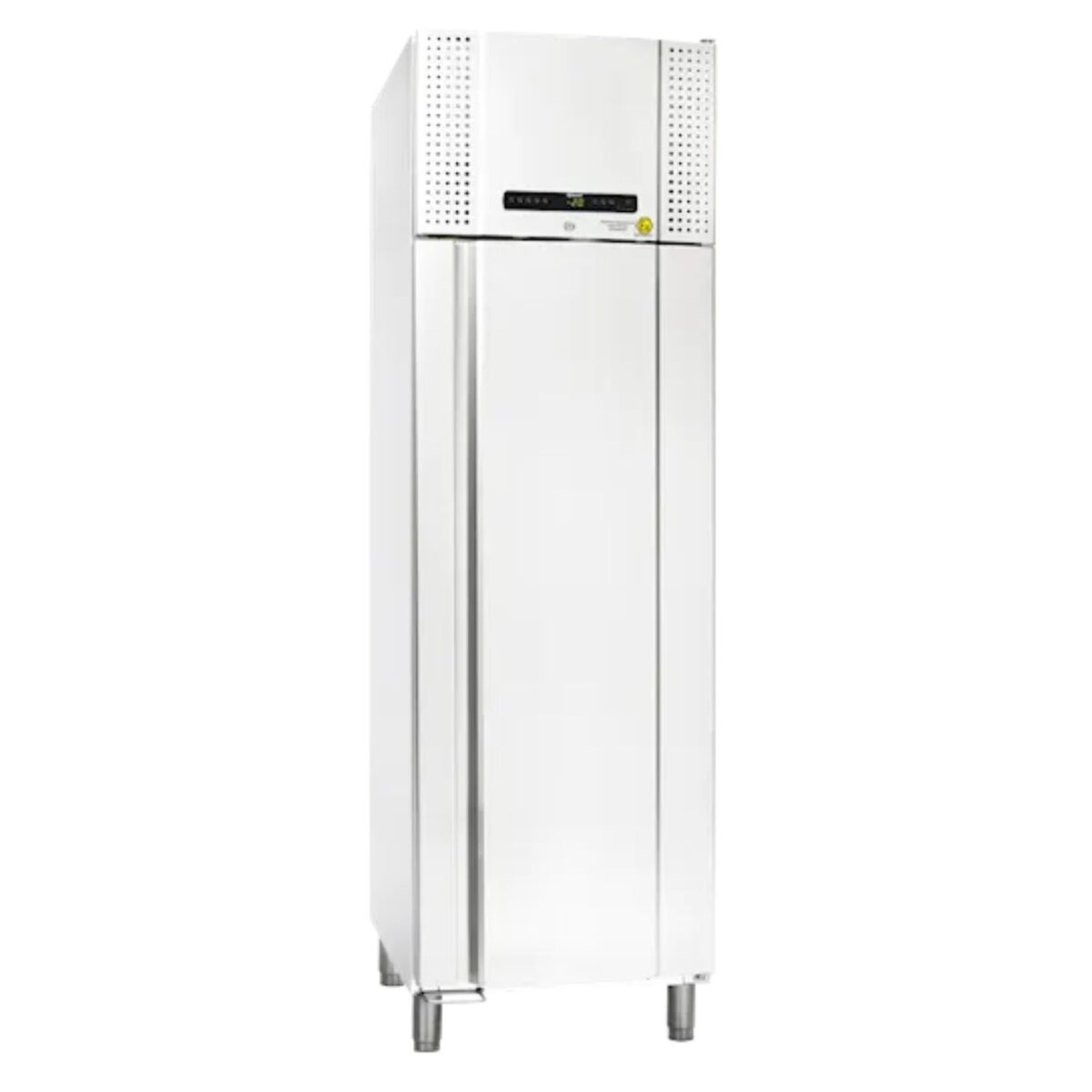
Gram BioLine supplies robust laboratory freezers in the BioPlus RF, BioMidi RF and BioBasic RF series. Therefore, this brand suits daily use in practice, clinic and research lab. Furthermore, the Gram BioLine range includes the ATEX-certified ExGuard ER600F. Notably, this is a spark-free freezer version for flammable materials.
Labselect supplies durable and user-friendly laboratory freezers. Importantly, lab managers and analysts contribute their experience to the selection. Moreover, all models come standard with audible and visual alarms and intuitive operation. In addition, compact undercounter models from -20°C and larger upright models are available.
ATEX laboratory freezer for flammable solvents
An ATEX laboratory freezer suits the storage of flammable solvents and chemicals. Specifically, it handles tissue samples in alcohol solutions and materials that may form explosive vapours. Moreover, the interior is spark-free. As a result, no electrical components can trigger ignition. For example, we supply the Gram BioLine ExGuard ER600F (-30°C) and Liebherr LGex series. Notably, both are ATEX Cat.3 Zone 2/22 certified with integrated ventilation activation. Therefore, this version suits laboratories storing ethanol, methanol, acetone, ether and similar flammable reagents at freezing temperature.
Applications by sector
Clinical laboratory: storage of plasma, serum, tissue samples and clinical reagents in medical diagnostic environments. Moreover, a medical freezer with validation documentation is often required.
Pharmaceutical industry and biotech: GMP and GDP compliant storage for production processes. Specifically, this includes vaccines, biological medicines and raw material storage.
Research and academic laboratory: storage of enzymes for molecular biology, antibodies and primers. In addition, long-term storage of DNA extracts and proteins at -20°C to -40°C.
Food and microbiological laboratory: storage of food samples and microbiological cultures within the food industry. Also, quality control materials are stored here.
Agricultural and horticultural laboratory: seed bank storage, crop samples and long-term sampling within the agriculture and horticulture sector.
Datalogging, alarms and compliance
For GLP, GMP and GDP compliant storage, continuous temperature monitoring is mandatory. Therefore, datalogging support is essential. Moreover, our laboratory freezers come standard with digital display and temperature registration. In addition, audible and visual alarms warn for deviation or power failure.
Furthermore, full datalogger modules with audit trail and monitoring software are available as an option. Similarly, integration with external monitoring systems is possible. For laboratories with higher compliance requirements, validation documentation and IQ/OQ protocols are available on request.
Additionally, we supply every lab freezer standard with a door lock for access security. Also, power failure alerts are included. For specific compliance requirements, our specialists advise on the right model and accompanying documentation.
Service and advice for your laboratory freezer
Poly Temp Scientific guides you from advice to installation and maintenance. Specifically, our certified service engineers provide periodic maintenance, calibration, validation and breakdown service. Moreover, our own repair facility in Bolsward ensures short turnaround times and expert support. For advice on the right laboratory freezer, please contact our specialists. Alternatively, request a quote for your chosen model. In addition, the complete overview of our cold storage equipment is available on the cold storage equipment page.
Frequently asked questions about laboratory freezers
What is a laboratory freezer?
A laboratory freezer is a professional freezing unit for controlled storage. Specifically, it stores samples, reagents, enzymes and biological materials between -10°C and -40°C. Moreover, it provides uniform temperature distribution, alarms for deviation and optional datalogging. By contrast, a household freezer does not offer these functions.
What temperature range does a laboratory freezer have?
Most laboratory freezers operate between -10°C and -40°C. Notably, -20°C is the standard setpoint for general use. Moreover, our Thermo Scientific and Gram BioLine models maintain uniform temperature throughout the working volume. As a result, samples experience the same storage conditions across the entire interior. For enzyme storage, a setpoint between -15°C and -35°C is common. By contrast, long-term DNA and protein storage requires -30°C to -40°C.
What is the difference between a laboratory freezer and a ULT freezer?
A laboratory freezer operates between -10°C and -40°C. Therefore, it suits general sample storage, enzymes, culture media and clinical reagents. By contrast, a ULT freezer (ultra low temperature) reaches -50°C to -86°C. Specifically, it serves long-term storage of DNA, RNA, cell cultures and stem cells. Moreover, for cells stored at liquid nitrogen temperature, see our cryogenic storage (-150°C to -196°C).
Which brands of laboratory freezer does Poly Temp supply?
Our available brands are Thermo Scientific, Liebherr, Gram BioLine and Labselect. Specifically, Thermo Scientific covers TSX High-Performance, TSX Enzyme Freezer, TSX Universal, TSX Core and TDE Standard. In addition, Liebherr provides LGPv and LGex series. Moreover, Gram BioLine offers BioPlus RF, BioMidi RF and BioBasic RF. Furthermore, for explosive environments, we supply the Gram BioLine ExGuard ER600F ATEX version. Notably, all models offer uniform temperature distribution, alarms and optional datalogging.
Does a laboratory freezer have automatic defrost or no-frost?
Both options are available depending on your application. Specifically, automatic defrost prevents ice build-up. Therefore, it suits frequently opened freezers with general storage. By contrast, manual defrost provides better temperature stability. As a result, it is recommended for longer-term storage of sensitive samples. Notably, during an automatic defrost cycle the interior temperature can temporarily rise. Moreover, the Thermo Scientific TSX High-Performance series is available in both versions.
What is an ATEX laboratory freezer and when do you need one?
An ATEX laboratory freezer suits the storage of flammable solvents and chemicals. Specifically, it handles tissue samples in alcohol solutions and materials forming explosive vapours. Moreover, the interior is spark-free and contains no electrical components that could trigger ignition. Therefore, you need an ATEX laboratory freezer when storing flammable reagents frozen. For example, we supply the Gram BioLine ExGuard ER600F and Liebherr LGex series. Notably, both are ATEX Cat.3 Zone 2/22 certified.
Drawer or shelf configuration, which suits my lab?
A drawer configuration works best for systematic biobank storage. Specifically, you index and quickly retrieve boxes of fixed dimensions, typically 2-inch or 3-inch cryoboxes. By contrast, a shelf configuration is more flexible. Therefore, it suits various material types and boxes of varying dimensions. As a result, shelf configuration fits general reagent and sample storage. Moreover, many Thermo Scientific and Liebherr models adjust internally between drawer and shelf configuration.
What is the energy consumption of a laboratory freezer?
Energy consumption depends on setpoint, capacity, ambient temperature and insulation. Specifically, our Thermo Scientific TSX Premium models with V-drive technology consume up to 50 percent less than conventional freezers. As a result, you achieve substantial savings through variable compressor speed. For example, an upright lab freezer of 500 litres at -30°C typically consumes between 600 and 1200 kWh per year. Moreover, energy efficiency is an important selection factor for continuous 24/7 operation in research laboratories.
Which samples are stored in a laboratory freezer?
Applications vary widely. Specifically, this includes enzymes, antibodies and kits for molecular biology. In addition, clinical samples such as serum and plasma, tissue samples and microbiological cultures fit here. Moreover, primers, oligonucleotides, vaccines and biological medicines are commonly stored. For very long-term storage of DNA extracts and cell cultures, -80°C in a ULT freezer is often chosen. By contrast, for regular samples, -20°C to -40°C in a laboratory freezer is sufficient.
How often should a laboratory freezer be validated?
For GLP and GMP environments, annual calibration and validation is mandatory. Specifically, temperature mapping at installation is required. Similarly, ISO 17025 and ISO 15189 accreditation have comparable requirements. By contrast, for regular laboratory applications, an annual temperature check is strongly recommended. Moreover, our certified service engineers carry out these checks as part of a maintenance contract. In addition, this includes calibration certification and mapping report.