Medical refrigerators support controlled storage of temperature-sensitive medicines. Compare Liebherr, Thermo Scientific and Gram BioLine models by application, temperature range and monitoring. Follow the stored product’s instructions and the documentation for the selected model.
Showing 1–20 of 37 results
-

TSX HP Assure pharmacy refrigerators
✓ 341 or 1,031 litres for pharmacy storage✓ Temperature range +2 to +8 °CPrice on request More information -
Sale!
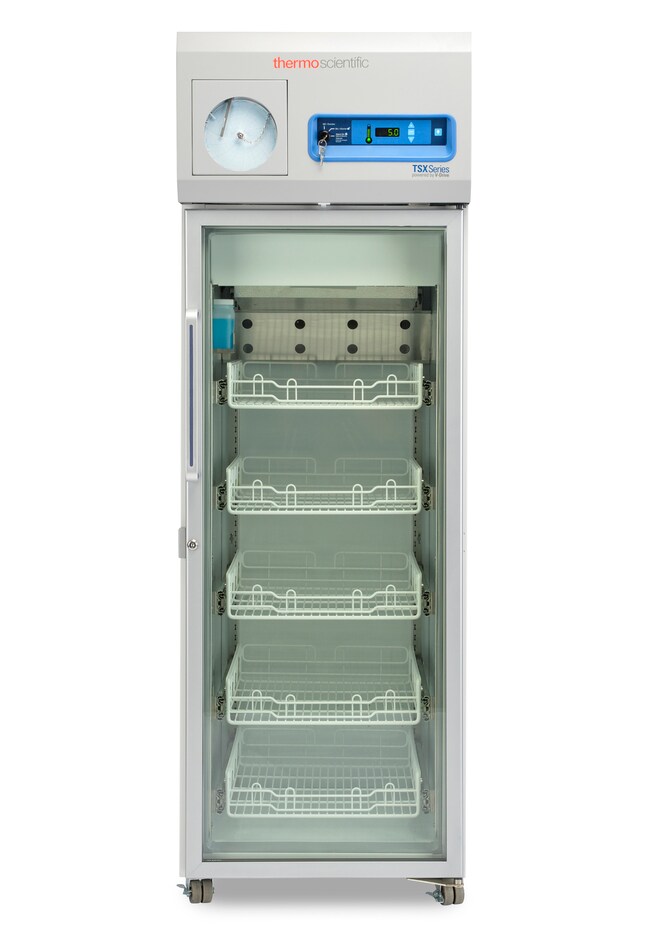
TSX Series laboratory refrigerators 2-8 °C | Thermo
✓ Very stable 2-8 °C temperature✓ V-Drive technology for energy-efficient usePrice range: €4.928,00 through €8.761,00 This product has multiple variants. The options may be chosen on the product page More information -
Sale!

Thermo Scientific TSX Series Pharmacy Refrigerator +5°C
✓ Specially designed for pharmacy and vaccine storage✓ NSF/ANSI 456 certifiedPrice range: €6.293,00 through €9.266,00 This product has multiple variants. The options may be chosen on the product page More information -
Sale!

Thermo Scientific TSG Series Solid Door Laboratory Refrigerator 2-8°C
✓ Stable storage at 2-8°C for vaccines and reagents✓ Insulated solid door protects against light exposurePrice range: €4.540,00 through €6.975,00 This product has multiple variants. The options may be chosen on the product page More information -
Sale!
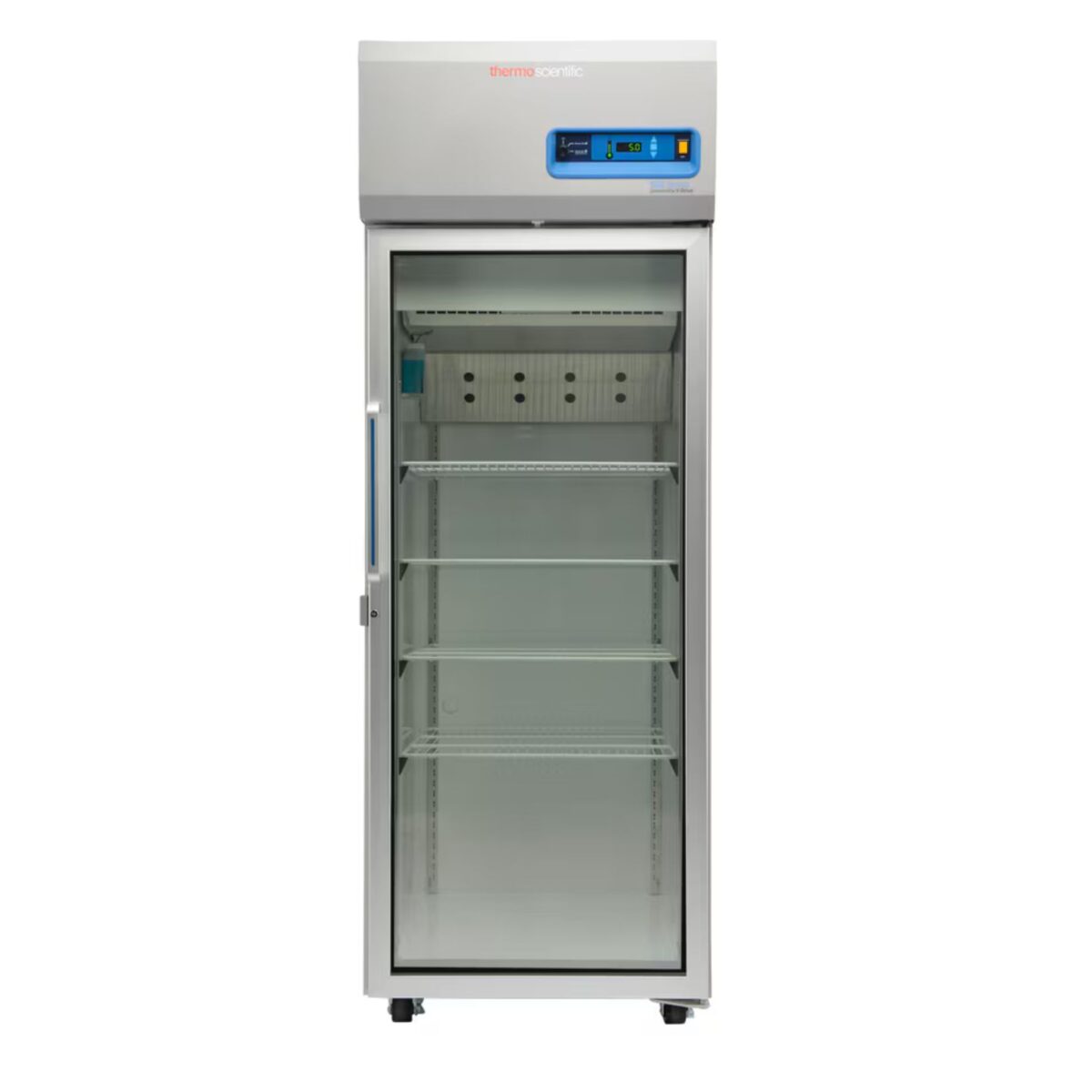
Thermo Scientific TSG Series Glass Door Laboratory Refrigerator 2-8°C
✓ Stable storage at 2-8°C for vaccines and reagents✓ Glass door with direct view of the contentsPrice range: €4.886,00 through €7.666,00 This product has multiple variants. The options may be chosen on the product page More information -
Sale!
Thermo Scientific TSE Series Laboratory Refrigerator 1-10°C
✓ Reliable cooling at 1-10°C for everyday use✓ Choice between glass door or insulated solid doorPrice range: €1.266,00 through €2.348,00 This product has multiple variants. The options may be chosen on the product page More information -
Sale!

Thermo Scientific TSE Series Combination Refrigerator-Freezer Stacked
✓ Cold and frozen storage within one stacked footprint✓ Refrigerator section at 5°C, freezer section at -20°CPrice range: €2.324,00 through €2.673,00 This product has multiple variants. The options may be chosen on the product page More information -
Sale!
Thermo Scientific TSU405 Undercounter Laboratory Refrigerator 2-8°C
✓ NSF/ANSI 456 validated for vaccine storage✓ Compact cooling at 2-8°C under the laboratory benchPrice range: €3.052,00 through €3.073,00 This product has multiple variants. The options may be chosen on the product page More information -
Sale!
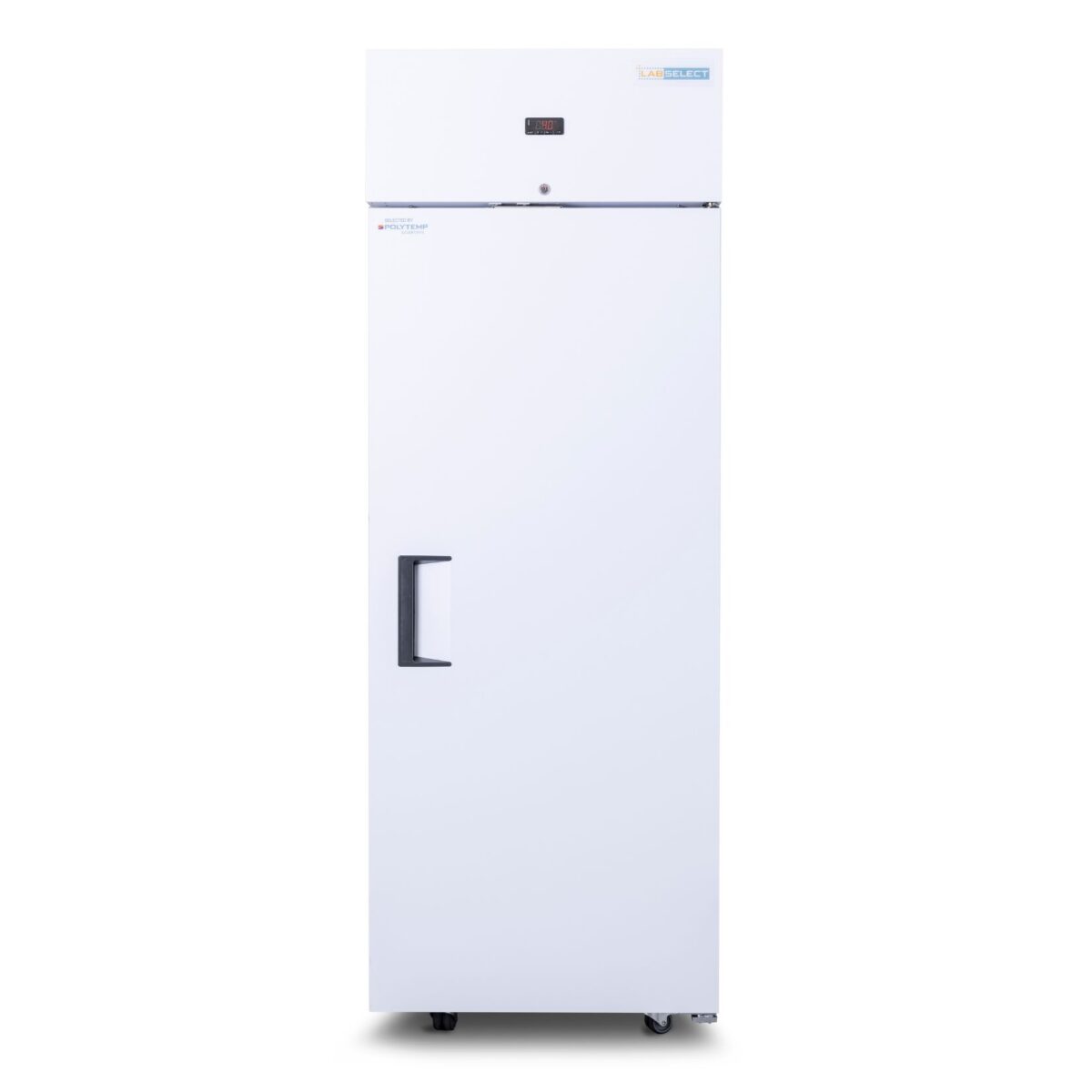
Basic laboratory refrigerators | Labselect
✓ Reliable +4 °C storage for laboratories✓ Low-maintenance monoblock cooling systemPrice range: €3.207,00 through €5.184,00 This product has multiple variants. The options may be chosen on the product page More information -
Sale!

Gram BioCompact II RR210 Laboratory Refrigerator 125 litre
✓ Compact medical refrigerator with 125 litre gross capacity.✓ Stable cooling between +2 and +20 °C.Original price was: €2.205,00.€1.984,00Current price is: €1.984,00. excl. VATMore information -
Sale!
Gram BioCompact II RR310 Laboratory Refrigerator 218 litre
✓ Mid-size refrigerator with 218 litre gross capacity.✓ Stable cooling between +2 and +20 °C.Original price was: €2.370,00.€2.133,00Current price is: €2.133,00. excl. VATMore information -
Sale!
Gram BioCompact II RR410 Laboratory Refrigerator 346 litre
✓ Large refrigerator with 346 litre gross capacity.✓ Stable cooling between +2 and +20 °C.Original price was: €2.535,00.€2.281,00Current price is: €2.281,00. excl. VATMore information -
Sale!
Gram BioCompact II RR610 Laboratory Refrigerator 583 litre
✓ Largest BioCompact II refrigerator with 583 litres.✓ Stable cooling between +2 and +20 °C.Original price was: €3.355,00.€3.019,00Current price is: €3.019,00. excl. VATMore information -
Sale!
Gram BioCompact II RR/RF210/210 Combination Refrigerator-Freezer 250 litre
✓ Cooling and freezing in one column combination.✓ Two separate cooling systems and controllers.Original price was: €4.675,00.€4.207,00Current price is: €4.207,00. excl. VATMore information -
Sale!
Gram BioCompact II RR/RF310/210 Combination Refrigerator-Freezer 343 litre
✓ Cooling (218 litres) and freezing (125 litres) in one column.✓ Refrigerator section +2/+20 °C and freezer section -25/-5 °C.Original price was: €4.840,00.€4.356,00Current price is: €4.356,00. excl. VATMore information -
Sale!
Gram BioMidi RR425 Laboratory Refrigerator 425 litre
✓ Compact 600 mm wide refrigerator with 425 litre gross capacity.✓ Stable cooling between +2 and +20 °C for pharmaceutical storage.Original price was: €4.110,00.€3.699,00Current price is: €3.699,00. excl. VATMore information -
Sale!
Gram BioMidi RR625 Laboratory Refrigerator 625 litre
✓ Spacious refrigerator with 625 litre gross capacity for intensive use.✓ Constant cooling between +2 and +20 °C for temperature-sensitive products.Original price was: €4.580,00.€4.122,00Current price is: €4.122,00. excl. VATMore information -
Sale!
Gram BioPlus ER500 Laboratory Refrigerator 500 litre
✓ Gross capacity of 500 litres.✓ Cooling range between -2 and +20 °C.Original price was: €5.740,00.€5.166,00Current price is: €5.166,00. excl. VATMore information -
Sale!
Gram BioPlus ER600D Laboratory Refrigerator 600 litre
✓ Gross capacity of 600 litres.✓ Cooling range between -2 and +20 °C.Original price was: €5.890,00.€5.301,00Current price is: €5.301,00. excl. VATMore information -
Sale!
Gram BioPlus ER600W Laboratory Refrigerator 600 litre
✓ Gross capacity of 600 litres.✓ Cooling range between -2 and +20 °C.Original price was: €5.890,00.€5.301,00Current price is: €5.301,00. excl. VATMore information